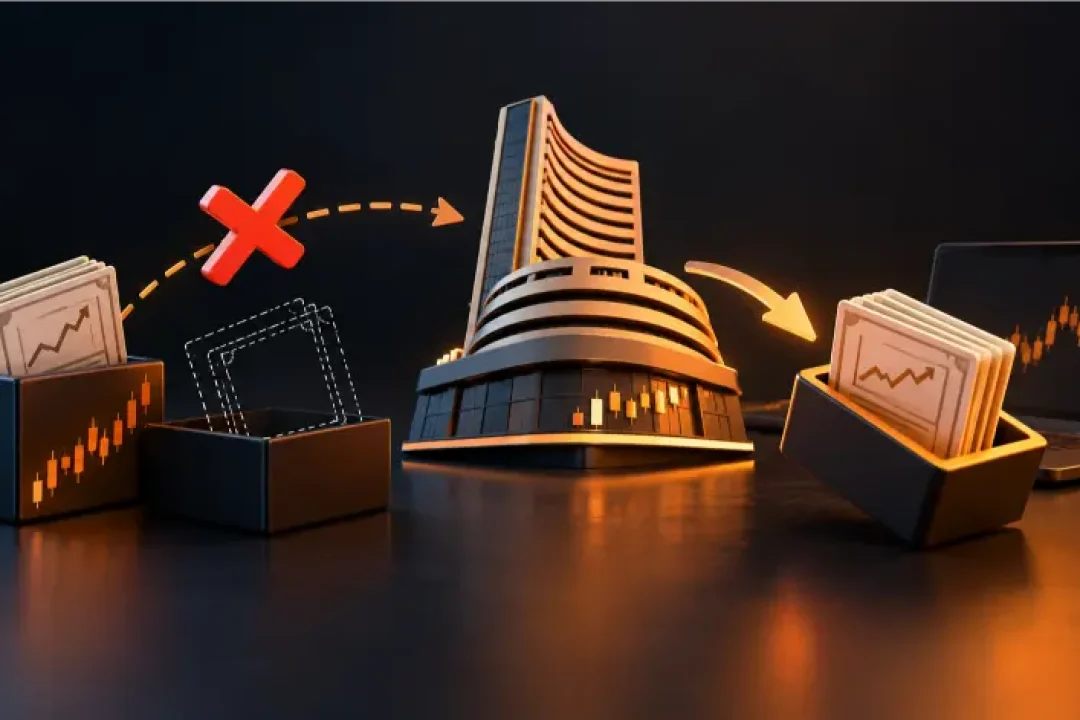
1. Introduction: The Trade That Looked Perfect Until Something Went Wrong
Imagine Buying Shares Worth ₹50,000
Imagine buying 100 shares at ₹500 each, watching the price rise to ₹520, and expecting a ₹2,000 profit, only to discover the next morning that your shares have not arrived in your demat account and an auction notification has appeared.
When Short Delivery Becomes a Problem
This is when What Is Short Delivery in the Stock Market? becomes more than a technical term, because it directly affects your money, your shares, and what happens when a seller fails to deliver securities on time.
How Share Delivery Works
In the Indian stock market, buying shares and receiving them in your demat account are two separate stages connected by the exchange’s settlement process.
A Simple Real-Life Example
Imagine paying for a laptop and receiving order confirmation, only to discover the next day that the supplier never delivered it, leaving you without the product despite completing your payment.


What Happens to the Buyer?
Similarly, when a seller fails to deliver shares, the buyer is not necessarily responsible for the failure but may experience a delay, an auction-related adjustment, or another settlement outcome depending on the exchange’s procedures.
The lesson: A successful buy order is not the same thing as completed settlement. Understanding that distinction can save you unnecessary panic when a trade does not go as expected.
2. What Is Short Delivery in Stock Market? Understanding the Actual Process
Short delivery occurs when a seller fails to deliver some or all of the shares required to complete a trade’s settlement.
How Does Short Delivery Happen?
Imagine you buy 50 shares of ABC Ltd. on the NSE at ₹800 per share, making your total purchase value ₹40,000, excluding charges.
What Happens When Shares Are Missing?
The seller must deliver all 50 shares through the settlement system, but they have only 30 shares available, leaving 20 shares undelivered.
Who Handles Short Delivery?
In the Indian stock market, the clearing corporation manages the shortfall through applicable settlement and auction procedures.
What happens when the seller cannot deliver?
The exchange’s clearing and settlement framework identifies the shortfall and applies the relevant procedure. Depending on the circumstances and applicable rules, the undelivered quantity may be taken into an auction or handled through an alternative close-out mechanism.
- Normal settlement: You receive the shares through the regular settlement process.
- Partial short delivery: Some shares are delivered, but the remaining quantity is short.
- Full short delivery: None of the expected shares are delivered through the normal settlement process.
- Auction or close-out: The applicable mechanism addresses the undelivered quantity and determines the financial consequences.
Here is a simple example. You purchase 100 shares at ₹250 each, paying a trade value of ₹25,000. If 15 shares are short-delivered, the outstanding quantity is worth ₹3,750 at your original purchase price.
That ₹3,750 is not automatically your final loss. The settlement process must determine how those 15 shares are handled and what adjustment applies to your account.
And this is where many beginners become confused. They see a missing quantity and assume the money has disappeared. Usually, the transaction is still being processed under the exchange’s settlement rules.
The lesson: Short delivery is a settlement failure, not a market-price movement. The first thing to investigate is the missing quantity and its settlement status.
3. Why Does Short Delivery Happen in the Indian Stock Market?
Short delivery happens when a seller cannot fulfil the obligation to deliver the securities sold by the settlement deadline. It can arise from a variety of operational, trading, or settlement-related circumstances.
When investors ask What is Short Delivery in Stock Market?, they often imagine that every short delivery must be deliberate. That assumption is too simplistic.
Reason 1: The seller does not have sufficient shares
Imagine an investor selling 200 shares of XYZ Ltd. after seeing a sharp price increase. The investor assumes the shares are available, but a problem with the holdings or delivery instructions prevents the required quantity from reaching the clearing corporation.
The investor’s intention does not complete the transaction. The shares still have to be delivered correctly.
Reason 2: A delivery-related operational mistake
Stock market settlement involves multiple steps, including broker systems, depository processes, and clearing corporation requirements. A mistake in the delivery process can interfere with the seller’s ability to meet the obligation.
Think about a bank transfer sent to the wrong account details. The sender may have enough money, but the intended recipient still does not receive it correctly. Similarly, owning securities does not eliminate every possible settlement problem.
Reason 3: Trading activity and unsettled positions
Some market participants take positions that require them to fulfil delivery obligations later. If those obligations are not met, a shortfall can arise.
However, do not confuse a short position in derivatives with short delivery in the cash market. They are different concepts, governed by different trading and settlement arrangements.
Reason 4: Unusual or illiquid securities
Suppose a stock normally trades only a few thousand shares a day. A sudden surge in trading activity can make the stock more difficult to source when a settlement shortfall needs to be resolved.
This does not mean every illiquid stock will experience short delivery. It means investors should understand that low liquidity can complicate certain market transactions.
Reason 5: Special settlement conditions
Corporate actions, restrictions on trading, and particular settlement arrangements can create circumstances that require special handling. The exact treatment depends on the security, the transaction, and the applicable exchange rules.
So, when you investigate a short delivery, do not jump straight to blaming manipulation. Start with the transaction record and the broker’s explanation.
The lesson: A short delivery tells you that a settlement obligation was not fulfilled as expected. It does not, by itself, reveal why the failure happened or whether anyone acted deliberately.
4. How Does the Short Delivery Auction Work on NSE and BSE?
A short delivery auction is a mechanism used to address eligible delivery shortfalls by sourcing the missing securities or otherwise resolving the obligation under the applicable rules. Its purpose is to complete settlement fairly within the prescribed framework.
Once you understand What is Short Delivery in Stock Market?, the next question is obvious: if the seller does not deliver the shares, who supplies them to the buyer?
Let’s walk through a practical example.
A numerical example of a short delivery auction
Suppose you purchase 100 shares of ABC Ltd. at ₹400 each. Your original trade value is ₹40,000. The seller fails to deliver 20 shares, leaving a shortfall worth ₹8,000 at the original trade price.
The applicable clearing corporation process may use an auction to obtain the missing quantity. An auction participant can offer the securities at a price determined through that process.
For illustration, assume the auction price for the 20 missing shares is ₹430 per share. The cost of sourcing those shares would be ₹8,600 before considering the detailed settlement treatment and applicable charges.
The difference between the original trade value of those 20 shares and the illustrative auction value is ₹600.
But be careful. That ₹600 is only a simple comparison of the two prices. It is not a universal formula for the amount credited or debited to your account. The actual settlement outcome depends on the exchange’s prescribed calculations, auction rules, and whether an auction succeeds.
The short delivery settlement process, step by step
- Step 1: The original trade is executed.
- Step 2: The seller’s delivery obligation is assessed during settlement.
- Step 3: A shortfall is identified for the relevant security and quantity.
- Step 4: The clearing corporation applies the prescribed auction or alternative resolution process.
- Step 5: The resulting securities delivery or financial adjustment is processed according to the applicable rules.
- Step 6: Your broker reflects the relevant status and settlement entries in your account.
NSE versus BSE: Is the process different?
NSE and BSE Settlement Rules
Both NSE and BSE have formal clearing and settlement systems to manage delivery failures and outstanding obligations.
Different Exchange Rules
Settlement procedures, auction schedules, calculations, and exceptions may differ depending on the exchange and security.
How to Verify Settlement Details
For NSE trades, check NSE settlement information and your broker’s records; for BSE trades, refer to the corresponding BSE process.
Where to Find Accurate Information
Always verify details through official exchange or clearing corporation notices and your broker’s settlement statement rather than outdated social media posts.
The lesson: An auction is a settlement mechanism, not a guaranteed promise that every missing share will arrive immediately. Always check the actual outcome of your transaction.
5. Short Delivery Penalty: Who Pays, and How Much?
The financial consequences of short delivery depend on the applicable exchange and clearing corporation rules, the security, the quantity short-delivered, and the auction or close-out outcome. There is no single penalty percentage that safely applies to every short-delivery situation.
When people search What is Short Delivery in Stock Market?, they often want one number: the penalty. Unfortunately, treating every case as a fixed percentage can lead to incorrect calculations.
Does the buyer pay the short-delivery penalty?
In an ordinary delivery shortfall, the seller or the party responsible for the delivery obligation may face the applicable financial consequences. The buyer’s treatment depends on the settlement outcome and the rules governing the transaction.
Suppose you bought 40 shares at ₹600 each. Your original trade value is ₹24,000. If all 40 shares are short-delivered, you should not automatically assume you must pay an extra penalty simply because you were the buyer.
Instead, check the transaction status and the settlement entries posted by your broker. They should help you determine whether the shares were delivered, an auction was conducted, or a close-out adjustment was applied.
What if the auction price is higher than the original purchase price?
Assume the original purchase price was ₹600 and the relevant auction price is ₹645. For 40 shares, the difference is ₹1,800.
That calculation illustrates the potential price difference, not a guaranteed debit to the buyer. The actual financial treatment depends on the prescribed settlement process, including how the auction proceeds and any applicable close-out calculations are handled.
It is also important to distinguish the auction price from brokerage, taxes, and other transaction charges. These are separate items and should be checked individually in the contract note or account statement.
What happens when an auction cannot resolve the shortfall?
If the required securities cannot be obtained through the prescribed auction process, the clearing corporation may use an applicable close-out mechanism. That mechanism determines the financial settlement for the undelivered quantity under the relevant rules.
The buyer may receive a financial adjustment instead of the expected securities through the ordinary settlement route. The exact amount and timing must be verified from the applicable rules and broker records.
Here is the practical point: do not estimate your final outcome from the stock’s current market price alone. Settlement calculations can follow specific reference prices and prescribed methods.
The lesson: A short delivery can have financial consequences, but the actual debit or credit must be established from the applicable settlement rules—not a guessed penalty percentage.
6. What Should You Do If Your Shares Are Not Credited?
If your purchased shares do not arrive when expected, first check whether the transaction is still within the applicable settlement timeline or has been marked as a short delivery. Then confirm the next step with your broker.
Knowing What is Short Delivery in Stock Market? is useful, but knowing how to respond calmly is even more valuable when your own money is involved.
Step 1: Check the settlement status
Open your broker’s trading platform and review the order book, trade book, holdings, and relevant settlement notifications. The order book confirms the order, while the trade book confirms execution; neither alone proves that the shares have been credited to your demat account.
For example, if you purchased 25 shares of a company on Monday, check the applicable settlement date and the broker’s latest status before assuming something has gone wrong.
Step 2: Check the contract note and account entries
Your contract note records the executed transaction and associated charges. Your ledger and demat transaction records can help explain how the transaction was processed.
Look for the security name, quantity, trade date, settlement reference, and any auction or close-out entry. These details give your broker something specific to investigate.
Step 3: Ask your broker precise questions
A vague complaint such as “My shares are missing” may take longer to resolve. Ask whether the transaction has been marked as short-delivered, whether an auction is scheduled or completed, and when the final settlement entry is expected.
Request written confirmation if the explanation is unclear. Keep the response and the relevant transaction documents.
Step 4: Escalate unresolved issues
If the broker does not resolve the matter, use the broker’s formal grievance process. Depending on the nature of the issue, you may also approach the relevant exchange’s investor grievance mechanism or SEBI’s available complaint channels.
Provide evidence, not just frustration. Include the contract note, transaction details, account statements, and your previous communications.
The lesson: When a settlement issue arises, a clear paper trail is more useful than repeated calls without transaction references.
7. Short Delivery vs. Short Selling: Two Different Things
Short delivery and short selling are different concepts: short delivery concerns a failure to fulfil a securities delivery obligation, while short selling involves selling securities that the seller does not own at the time of sale, subject to the applicable market rules.
This distinction matters because people sometimes hear the word “short” and assume both activities describe the same trade.
| Feature | Short Delivery | Short Selling |
|---|---|---|
| Meaning | A delivery obligation is not fulfilled. | Securities are sold short under the applicable rules. |
| Primary issue | Settlement failure. | Market position and subsequent delivery or settlement. |
| Who initiates it? | It arises when a seller fails to deliver the required securities. | A trader intentionally enters a short sale. |
| Is it always intentional? | No. Operational or other settlement issues may cause it. | The short sale is intentional, although subsequent problems may occur. |
| Typical resolution | Applicable auction or close-out process. | Position management and compliance with applicable settlement rules. |
Imagine two separate situations. In the first, you sell shares you own but fail to deliver them by the required deadline. In the second, you deliberately take a short position expecting the share price to fall.
The first describes a delivery problem. The second describes a trading strategy.
Indian market rules restrict how short selling may be undertaken, and investors must follow the relevant requirements for their market segment and security. A short sale does not automatically mean that short delivery will occur.
The lesson: Learn the difference before making a trade. Similar terminology does not mean identical risk or regulation.
8. Two Myths About Short Delivery That Can Mislead Investors
Two common misconceptions are that every short delivery proves manipulation and that the buyer always loses money when shares are not delivered. Neither conclusion follows automatically from a delivery shortfall.
When you understand What is Short Delivery in Stock Market?, you can separate a genuine settlement issue from assumptions about blame and loss.
Myth 1: Every short delivery means someone manipulated the stock
A short delivery does not, by itself, establish manipulation, fraud, or deliberate misconduct. The failure could involve operational errors, unavailable securities, or another settlement-related problem.
Suppose a seller has a technical issue while completing the delivery process. The buyer does not receive the expected quantity through normal settlement, but that fact alone does not prove that the seller intentionally caused the problem.
Of course, deliberate misconduct is possible in financial markets. It simply requires evidence beyond the existence of a short delivery.
My approach is straightforward: investigate the transaction first, then draw conclusions from the available evidence.
Myth 2: The buyer always loses money
The buyer does not automatically suffer a financial loss merely because the seller fails to deliver. The applicable auction or close-out process determines the outcome for the undelivered quantity.
Imagine buying 10 shares at ₹1,000 each. If the shares are short-delivered, the settlement process may resolve the obligation through an auction or financial adjustment. The final outcome depends on the applicable rules and the actual settlement entries.
There may be inconvenience, uncertainty, or an opportunity cost while the transaction is being resolved. But those concerns are different from proving a direct financial loss.
And that distinction matters. Fear often makes investors assume the worst before they have checked the facts.
The lesson: Neither blame nor loss should be assumed. Verify what happened, how the settlement was resolved, and what the final account entries show.
9. Can Short Delivery Create Trading Opportunities?
Short delivery is primarily a settlement issue, not a reliable standalone trading signal. A delivery shortfall does not automatically predict whether a stock will rise or fall.
Investors sometimes hear about an auction or an unusual delivery event and begin searching for a quick opportunity. I would be careful with that approach.
Suppose a stock trades at ₹300 and you learn that some shares were short-delivered. You might assume that the seller will be forced to buy shares at a higher price, creating an opportunity for existing holders.
But the conclusion is premature. You do not necessarily know the auction price, the quantity involved, the settlement outcome, or whether the event has any meaningful effect on the stock’s broader supply and demand.
Consider the wider picture instead:
- Liquidity: Can you enter and exit the position without excessive price impact?
- Fundamentals: Is the company’s business improving, weakening, or remaining stable?
- Valuation: Does the market price make sense relative to earnings, cash flow, and growth?
- Risk: What happens if your prediction is wrong?
- Evidence: Is the information based on an official settlement notice or merely market speculation?
Technology can help you organize these questions. For example, can ai help in stock market research? Yes, it can assist with screening data, comparing financial ratios, and summarizing disclosures, but its output still needs verification.
Similarly, a tool such as Goela Ai should be assessed on the quality and transparency of the information it provides, not on promises of guaranteed returns.
I prefer a well-supported investment thesis over a clever interpretation of one settlement event. The former can be tested. The latter can easily become speculation.
The lesson: Use settlement information to understand market mechanics, not to invent a trading signal that the evidence does not support.
10. Practical Action Steps: What I Would Do Before Drawing a Conclusion
If you encounter a short delivery, the safest response is to verify the transaction, understand the applicable settlement procedure, and keep a record of the final outcome. These steps help you avoid unnecessary assumptions and make better decisions.
The question What is Short Delivery in Stock Market? becomes easier to answer when you connect the concept to the records in your own trading account.
Action 1: Verify the trade and missing quantity
Compare your trade book, contract note, holdings, and demat statement. Confirm the security, quantity, trade date, and expected settlement date. If only part of the order is missing, record the exact quantity rather than treating the entire trade as undelivered.
Action 2: Confirm the applicable auction or close-out rules
Contact your broker and ask for the current settlement status, relevant auction details, and expected financial adjustment. Cross-check the explanation against the applicable NSE or BSE and clearing corporation rules. Do not rely on a generic penalty percentage found in an old article.
Action 3: Review the final account entries and escalate if necessary
Once the process is completed, check whether the shares were credited or a financial adjustment was posted. Reconcile the amount against your contract note and ledger. If something remains unexplained, submit a formal written complaint to your broker and use the relevant exchange or SEBI grievance channel when appropriate.
The lesson: Three disciplined checks can replace hours of speculation: verify the trade, confirm the rules, and reconcile the outcome.
11. Frequently Asked Questions About Short Delivery
What is Short Delivery in Stock Market in simple words?
Short delivery occurs when a seller fails to deliver some or all of the shares required to complete settlement. The clearing corporation applies the relevant process to address the missing quantity, potentially through an auction or close-out mechanism.
How long does short delivery take to resolve in India?
The resolution time depends on the settlement schedule, the applicable auction or close-out procedure, and the security involved. Do not assume a universal number of days. Check the latest settlement status with your broker and consult the applicable exchange rules.
Can a buyer lose money because of short delivery?
A buyer does not automatically lose money because of short delivery. The final outcome depends on how the undelivered quantity is resolved and how the applicable settlement adjustments are calculated. The buyer should review the actual account entries before determining whether a loss occurred.
What is the difference between a short delivery auction and a normal stock market auction?
A short delivery auction is used within the settlement framework to address a securities delivery shortfall. A normal stock market order-book auction, by contrast, can refer to other trading mechanisms or special trading sessions. The purpose and rules depend on the specific type of auction.
Can I sell shares before they are credited to my demat account?
You should not assume that shares awaiting settlement are available for every type of sale. Whether a sale is permitted depends on the broker’s systems, applicable exchange rules, the security, and the status of the original transaction. Confirm the permitted treatment with your broker before placing another order.
Does short delivery happen only on NSE?
No. Short delivery can arise in settlement systems on both NSE and BSE, subject to the relevant exchange and clearing corporation rules. The operational details and applicable procedures should be checked for the exchange where the original trade was executed.
Is short delivery the same as a failed payment?
No. A failed payment concerns a money-transfer or payment obligation, whereas short delivery concerns the failure to deliver securities required for settlement. Both can prevent a transaction from completing as expected, but they involve different obligations and resolution procedures.
The lesson: When you know which settlement problem you are facing, you can ask better questions and avoid confusing a temporary delay with a permanent loss.
Conclusion: Respect the Settlement, Not Just the Stock Price
I have always believed that investing is not just about picking the right company or buying at the right price. It is also about understanding what happens after you click the buy button.
Short delivery exposes a part of the market that many investors overlook: every trade carries obligations, and those obligations must be settled through a defined process. When something goes wrong, the rules determine what happens next.
You do not need to memorize every auction calculation. You do need to know where to find reliable information, how to question an unexplained entry, and when to seek help from your broker or the relevant authority.
Keep these three action steps close: verify the transaction, confirm the settlement procedure, and reconcile the final outcome.
The market rewards patience, but your money deserves verification.