Imagine running a business that earns more money than ever before. Your sales are growing, your profits are increasing, and your company is breaking its own records. Naturally, you would expect people to become more interested in investing in your business.
But what if that does not happen?
What if your company reports record revenue and profits, yet its stock price barely moves? What if investors are not as excited as you expected?
This is the situation that makes Reliance Industries an interesting company to understand.
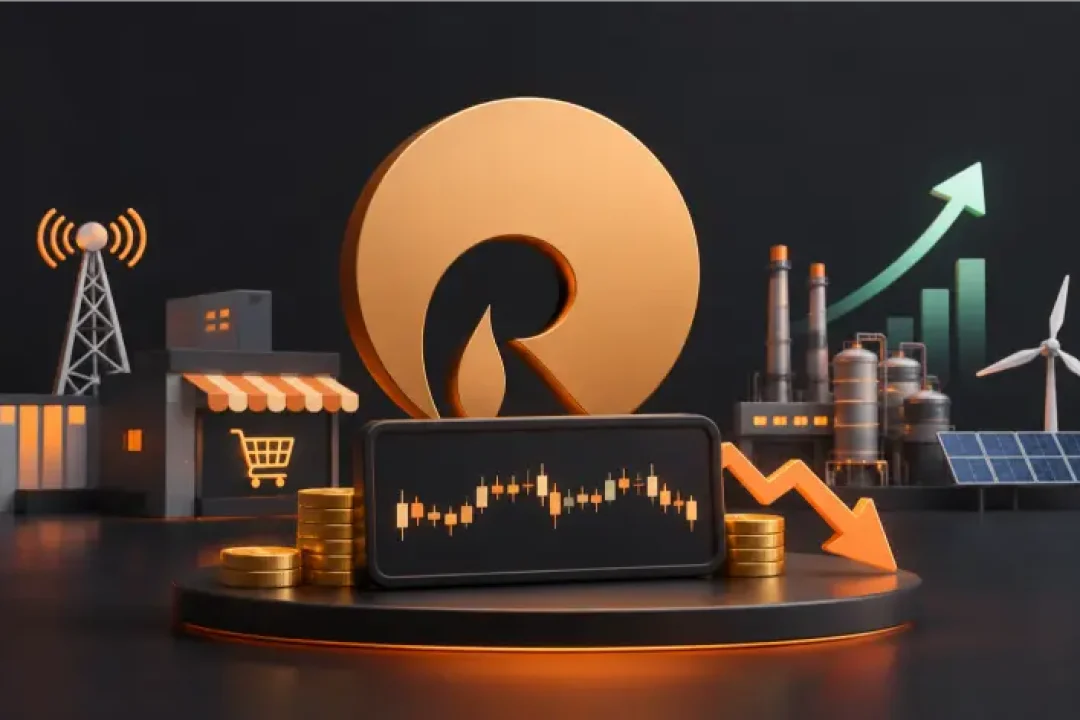
Reliance Industries has businesses across several industries, including retail, telecommunications, energy, and petrochemicals. The company has invested heavily in expanding these businesses. Its overall growth story looks promising, but its stock performance raises an important question: Why Reliance Stock Is Falling Despite Record Profit?


At first, this situation might seem confusing. If a company is making more money, shouldn’t its stock price increase?
Not necessarily.
There is something important that investors look at beyond revenue and profit. It is called free cash flow. Understanding this one financial concept can help explain why a company can report excellent results while its stock struggles to gain momentum.
In this article, we will break down Reliance Industries’ financial situation in simple language. We will understand where the company’s money is going, why heavy investments can affect cash flow, what happened during Jio’s earlier growth journey, and which seven financial metrics investors should monitor.
Let’s start with the basics.
1. Understanding the Difference Between Revenue, Profit, and Cash Flow
Before understanding Reliance’s stock performance, we need to understand three important financial terms: revenue, profit, and cash flow.
These words may sound complicated, but their meanings are quite simple.
What Is Revenue?
Revenue is the total amount of money a company earns by selling its products or services.
Think about a small grocery shop.
Suppose the shop sells products worth ₹1 lakh in one month. That ₹1 lakh is its revenue.
It does not mean the shopkeeper has ₹1 lakh in their pocket. The shopkeeper still needs to pay for products, rent, electricity, employees, and other expenses.
The same principle applies to large companies like Reliance Industries.
When Reliance sells products through its retail stores, provides telecom services through Jio, or sells energy and petrochemical products, it generates revenue.
What Is Profit?
Profit is the money left after subtracting expenses from revenue.
Let’s continue with our grocery shop example.
Suppose the shop earns ₹1 lakh in revenue.
Its expenses are:
- Product purchases: ₹60,000
- Shop rent: ₹10,000
- Employee salaries: ₹10,000
- Electricity and other expenses: ₹5,000
The total expenses are ₹85,000.
Therefore:
Revenue = ₹1,00,000
Expenses = ₹85,000
Profit = ₹15,000
The shop has earned ₹15,000 in profit.
Large companies calculate profit using several accounting measures, such as operating profit, profit before tax, and net profit.
What Is Free Cash Flow?
Now comes the most important concept in this discussion.
Free cash flow is the money a company has left after paying its operating expenses and making the investments needed to maintain or grow its business.
Let’s understand this through another simple example.
Imagine that your grocery shop earns ₹15,000 in profit. However, you decide to expand your business.
You purchase new refrigerators, renovate the shop, and buy additional equipment.
These investments cost ₹12,000.
Although your shop generated ₹15,000 in profit, you have only ₹3,000 remaining after these investments.
This is a simplified example of why profit and free cash flow can be very different.
A company can report strong profits while spending enormous amounts of money on expansion.
That is an important part of the Reliance story.
2. Why Reliance Industries Can Report Record Profits While Its Stock Remains Stagnant
Now that we understand the difference between revenue, profit, and free cash flow, let’s return to Reliance Industries.
The company has multiple business divisions. These include Reliance Retail, Jio, petrochemicals, oil and gas, and its newer energy initiatives.
At a group level, the company has been expanding its business operations and reporting strong financial performance.
However, investors do not look at revenue and profit alone.
They also want to know how much actual cash the company generates after spending money on its business.
This is where the situation becomes interesting.
Despite its strong reported financial performance, Reliance has experienced pressure on its free cash flow over the past three years, according to the video’s analysis.
This means the company has been using a significant amount of its available cash to fund business expansion and other investments.
So, when investors ask, Why Reliance Stock Is Falling Despite Record Profit, they need to look beyond the company’s profit figures.
The bigger question is whether the company can convert its business growth into sustainable cash generation.
A Growing Business Does Not Always Mean More Available Cash
Imagine that you earn ₹50,000 every month.
You decide to purchase a car, upgrade your home, and invest in a new business.
Your monthly income has not changed, but your spending has increased significantly.
Even though you are earning the same amount, the money available in your bank account becomes smaller.
Companies experience something similar.
Reliance is investing in different business areas to prepare for future growth. These investments require significant amounts of money.
The company may generate more revenue and report higher profits, but its cash can still be under pressure because of the money being spent on expansion.
This does not automatically mean the business is performing poorly.
It means investors need to understand whether today’s investments will generate enough cash in the future.
3. Where Is Reliance Industries Spending Its Money?
One of the biggest reasons behind the pressure on free cash flow is the company’s heavy capital expenditure.
Capital expenditure, commonly called CapEx, refers to money spent on purchasing, building, or upgrading long-term business assets.
For example, building a factory, opening a warehouse, purchasing machinery, and developing an energy facility are all examples of capital expenditure.
These investments are usually made to support business operations over several years.
In Reliance’s case, the video highlights three important areas of investment.
A. Reliance Retail: Expanding Its Retail Business
Reliance Retail is one of the important parts of the company’s growth strategy.
Think about how many products people purchase every day.
They buy groceries, clothes, electronics, personal care products, and household essentials.
Reliance Retail operates across several retail categories and aims to reach more customers through its physical and digital business operations.
However, running and expanding a retail business requires considerable investment.
Some major expenses include:
- Opening new retail stores.
- Building warehouses and distribution centres.
- Purchasing inventory.
- Improving supply chain operations.
- Developing technology and digital platforms.
- Upgrading existing stores and facilities.
Imagine opening 100 new stores.
You need to pay for buildings, equipment, employees, inventory, transportation, and technology.
Even before these stores start generating meaningful profits, the company must spend money to establish them.
That is why business expansion can put pressure on free cash flow in the short term.
The real benefit comes later, when these stores attract customers and generate enough revenue to justify the original investment.
B. New Energy: Investing in the Future
Another important area is Reliance’s new energy business.
The energy industry is changing.
Companies around the world are exploring renewable energy, solar power, energy storage, and other technologies to prepare for future energy requirements.
Reliance has also announced major ambitions in the new energy sector.
However, entering a new industry is not as simple as opening a small shop.
It requires factories, research, advanced equipment, technology, infrastructure, and skilled employees.
These projects can require substantial investment before they begin generating meaningful revenue.
For example, imagine building a large solar manufacturing facility.
First, you need to purchase land, construct the factory, install machinery, develop the technology, and establish the supply chain.
All of this requires money.
Only after the facility becomes operational can it begin producing products and generating revenue.
Even then, reaching a profitable scale can take time.
This creates a gap between the money invested today and the money expected to be earned in the future.
That is one reason investors closely monitor Reliance’s new energy business.
They want to see whether these investments eventually become strong sources of revenue and cash flow.
C. Petrochemicals: Maintaining and Expanding Existing Operations
Petrochemicals are another important part of Reliance’s business.
These materials are used to manufacture products such as plastics, packaging materials, synthetic fibres, and several industrial products.
Running large petrochemical facilities requires expensive machinery, maintenance, technology, and infrastructure.
Companies operating in this industry also need to manage changing market conditions, raw material costs, and demand.
When a company invests in upgrading or expanding its facilities, it spends money today to improve its ability to operate in the future.
These investments can support long-term growth, but they also affect the amount of cash available in the short term.
Therefore, Reliance’s investment in retail, new energy, and petrochemicals needs to be considered together.
The company is not simply spending money without a purpose. It is investing in different business opportunities.
However, investors still need evidence that these investments are generating the expected returns.
4. How Can Depreciation and Finance Costs Affect Profit?
There is another important part of the story.
Even after a company invests money in building factories, purchasing equipment, and expanding operations, the financial impact does not end there.
Two accounting concepts become particularly important: depreciation and finance costs.
Understanding Depreciation in Simple Language
Suppose you purchase a machine for ₹10 lakh.
You expect to use that machine for ten years.
You cannot treat the entire cost of the machine as an ordinary expense in every year. Instead, accounting rules generally allow the cost to be spread across the useful life of the asset.
This process is called depreciation.
For example, if the machine has a useful life of ten years and a negligible residual value, its straight-line depreciation would be approximately ₹1 lakh per year.
The machine was purchased using money earlier, but depreciation is recorded as an expense over time.
This is important because depreciation reduces reported accounting profit.
However, depreciation itself does not mean the company is paying that same amount of cash every year.
The actual cash payment usually happened when the company purchased the asset.
This explains why profit and cash flow can show different pictures of the same business.
A company may report lower profit because of depreciation even when it is generating cash from its operations.
On the other hand, heavy investment in new assets can also reduce free cash flow because the company has to pay for those assets.
Understanding Finance Costs
Now imagine that you want to purchase a house.
You do not have enough money, so you take a loan from a bank.
You will have to repay the loan and pay interest.
Companies also borrow money to fund business expansion.
When a company takes loans, it generally needs to pay interest. This interest becomes a finance cost in its financial statements.
If a company has borrowed substantial amounts to fund its expansion, rising finance costs can affect its reported profit.
This is another reason investors monitor debt and interest expenses.
The important thing is to understand the difference between investing for growth and taking on too much financial risk.
Borrowing money to build a productive business can make sense.
But the business must eventually generate enough cash to support its debt obligations.
5. The Jio Example: Why Heavy Investment Can Take Time to Deliver Results
One of the most interesting comparisons in the video is Reliance’s earlier Jio journey.
Jio entered the Indian telecommunications market with an ambitious strategy.
It invested heavily in network infrastructure, technology, and customer acquisition.
Building a telecommunications network is expensive.
A company needs towers, fibre networks, data centres, spectrum, equipment, and other infrastructure.
These investments need to happen before the business can serve millions of customers.
In Jio’s early growth phase, the company focused on expanding its network and building a large customer base.
Its aggressive pricing strategy helped it attract customers and change the Indian telecom market.
However, building a business at this scale required significant initial investment.
The company needed time to develop its infrastructure, increase customer adoption, and build sustainable revenue streams.
As the business matured, its ability to generate cash improved.
This historical example helps explain why Reliance’s current investment cycle deserves attention.
What Can Investors Learn From Jio?
The main lesson is that business expansion and financial returns do not always happen at the same time.
A company may spend several years building infrastructure before seeing the full financial benefits.
Think about planting a tree.
You spend time preparing the soil, planting the seed, and watering it regularly.
For a while, you may not see much growth.
But if the conditions are right, the tree eventually becomes bigger and stronger.
Business investments can work in a similar way.
The company spends money first and expects the investment to generate benefits later.
However, there is one important difference.
Not every investment becomes successful.
A new business may face competition, changing demand, higher costs, or delays.
Therefore, investors should not automatically assume that Reliance’s new investments will follow exactly the same path as Jio.
Jio provides a useful historical comparison, not a guarantee of future performance.
The real question is whether the new businesses can generate strong and sustainable returns.
6. Why the Stock Market Does Not Always Reward Record Profits
Now let’s answer a common question.
If Reliance is reporting record revenue and profit, why isn’t the stock price automatically increasing?
The answer is that the stock market looks forward.
Investors do not simply purchase shares based on what a company earned in the past.
They also consider what the company might earn in the future.
For example, imagine two companies.
Company A earns ₹100 crore in profit but has very little cash left after its investments.
Company B earns ₹80 crore in profit but generates strong free cash flow and has manageable debt.
Which company would investors prefer?
There is no universal answer.
It depends on their growth prospects, valuations, risks, and future opportunities.
But some investors may prefer Company B because it converts more of its earnings into available cash.
This is why understanding Why Reliance Stock Is Falling Despite Record Profit requires looking at the company’s financial quality, not just its headline profit numbers.
Investors Want to See Returns From Investments
When a company announces a large investment project, investors usually want answers to several questions:
- How much money will the project require?
- When will the project become operational?
- How much revenue could it generate?
- Will it become profitable?
- How long will it take to recover the investment?
- Will the business generate positive cash flow?
These questions matter because investments have an opportunity cost.
Money spent on one project cannot be used somewhere else at the same time.
If a company spends billions building new facilities, investors want to know whether those facilities will create enough value.
Expectations Also Matter
Stock prices are influenced by expectations.
Suppose investors already expect a company to report strong profits.
When the company finally announces those profits, the market may not react positively because the results were already expected.
Similarly, if investors are worried about declining cash flow, higher debt, or expensive expansion plans, strong revenue growth may not be enough to change their opinion.
This does not necessarily mean the company is in trouble.
It means investors are evaluating more than one financial number.
7. Seven Important Financial Metrics Investors Should Monitor
Instead of focusing only on the stock price, investors should monitor the financial performance of the company.
The following seven metrics can help build a clearer picture of Reliance’s financial position and its ability to turn investments into long-term growth.
1. Free Cash Flow
This is arguably the most important metric in the video’s analysis.
Free cash flow tells investors how much cash remains after a company covers its operating requirements and capital expenditure.
A simplified formula is:
Free Cash Flow = Operating Cash Flow − Capital Expenditure
For example:
Suppose a company generates ₹10,000 crore from its operations.
It spends ₹7,000 crore on capital expenditure.
Its simplified free cash flow would be ₹3,000 crore.
Now imagine that the company’s operating cash flow increases to ₹12,000 crore, but capital expenditure increases to ₹11,000 crore.
Its free cash flow falls to ₹1,000 crore.
The company is generating more operating cash, but its investments are consuming most of it.
This is why investors should monitor whether Reliance’s free cash flow starts improving as its major investment projects mature.
A temporary decline may be manageable if investments generate strong future returns.
However, consistently weak free cash flow deserves attention.
2. Debt-to-EBITDA Ratio
Debt is not always bad.
Companies often borrow money to build factories, expand operations, and invest in new opportunities.
The problem arises when debt becomes difficult to manage.
The Debt-to-EBITDA ratio helps investors understand how much debt a company carries compared with its operating earnings.
EBITDA stands for Earnings Before Interest, Taxes, Depreciation, and Amortisation.
In simple terms, it is a measure of operating earnings before certain financial and accounting expenses.
A simplified formula is:
Debt-to-EBITDA = Total Debt ÷ EBITDA
For example, suppose a company has total debt of ₹20,000 crore and EBITDA of ₹10,000 crore.
Its Debt-to-EBITDA ratio is 2.
This means its debt is equal to twice its annual EBITDA.
Investors generally want to see whether the company can manage its debt comfortably.
A rising ratio may indicate increasing financial pressure, although the ideal level depends on the industry and the company’s circumstances.
For Reliance, monitoring this ratio can help investors understand whether its expansion is creating excessive financial risk.
3. Capital Expenditure
Capital expenditure tells investors how much money a company is investing in long-term assets.
For Reliance, this includes investments across retail, energy, petrochemicals, and other business operations.
Investors should monitor both the amount of money being spent and the purpose behind it.
High capital expenditure is not automatically negative.
In fact, it can be a sign that a company is preparing for future opportunities.
But the important question is whether the investment is productive.
For example, opening a new facility makes sense if there is sufficient demand for its products.
Building infrastructure without a clear path to revenue generation can create financial pressure.
Investors should therefore compare capital expenditure with future revenue, operating earnings, and free cash flow.
4. Revenue Growth From New Energy Businesses
Reliance’s new energy ambitions are an important part of its long-term growth strategy.
However, announcements and investment plans are only the beginning.
Investors need to see actual business progress.
They should monitor:
- Whether manufacturing facilities become operational.
- Whether production capacity increases.
- Whether the company starts generating meaningful revenue.
- Whether customer demand is developing.
- Whether operating costs remain manageable.
- Whether the business moves towards profitability.
A company may spend years developing a new business.
But investors eventually need evidence that the investment is creating financial value.
The progress of Reliance’s new energy operations will therefore be an important factor to watch.
5. Reliance Retail’s Revenue and Profitability
Reliance Retail is another important business to monitor.
Revenue growth can show whether the company is attracting more customers and increasing sales.
However, revenue alone does not tell the entire story.
Investors should also examine operating profit, margins, store productivity, and cash generation.
For example, imagine a retailer opens 50 new stores.
Its total revenue may increase because it now has more locations.
But if the new stores are not generating sufficient sales or require high operating expenses, profitability may remain under pressure.
That is why investors should look beyond the number of stores.
They should understand whether the retail business is becoming more efficient and profitable as it grows.
6. Finance Costs and Interest Expenses
When companies borrow money, they must pay interest.
These payments can affect profitability and reduce the amount of cash available for other purposes.
Investors should monitor whether finance costs are increasing or decreasing.
They should also compare interest expenses with the company’s operating earnings and cash generation.
If borrowing costs rise faster than operating earnings, the company may face increasing financial pressure.
However, investors should not examine interest expenses in isolation.
They need to understand the purpose of borrowing, the repayment schedule, and the expected returns from the projects being funded.
7. Operating Cash Flow
Operating cash flow shows how much cash a company generates through its regular business activities.
It is different from accounting profit.
A company may report strong earnings but receive payments from customers later.
Similarly, changes in inventory, supplier payments, and customer credit can affect the actual cash generated by operations.
Operating cash flow helps investors understand whether the company’s core businesses are generating real money.
For Reliance, this metric is important because the company operates across several different industries.
Investors should monitor whether its existing businesses are generating enough operating cash to support future expansion.
They should also examine whether improvements in operating cash flow are eventually translating into stronger free cash flow.
8. What Could Improve Reliance’s Financial Position in the Future?
Now that we understand the challenges, let’s look at what could make the situation better.
Reliance has invested heavily in building businesses that may contribute to its future growth.
However, the benefits of these investments depend on execution.
There are several developments investors may want to watch.
New Projects Becoming Operational
The first important development would be the successful completion of major investment projects.
A project that is still under construction generally requires money.
Once it becomes operational, it has the opportunity to start generating revenue.
As more projects become productive, the relationship between capital expenditure and operating cash generation may improve.
Better Cash Generation From Existing Businesses
Reliance already has several established businesses.
If these businesses generate stronger operating cash flow, they can support expansion and reduce the need for additional borrowing.
For example, better retail productivity or improved profitability in an existing business can strengthen the group’s overall financial position.
This is important because companies need a healthy balance between investing in growth and generating cash from existing operations.
New Energy Businesses Reaching Commercial Scale
The new energy sector offers opportunities, but it also comes with challenges.
Technology changes, competition, manufacturing costs, and customer demand can influence business performance.
If Reliance successfully develops its new energy operations and starts generating meaningful revenue, these businesses could become an important part of its future growth.
But investors should wait for measurable results rather than relying entirely on future promises.
Better Management of Debt and Capital Expenditure
Another important factor is financial discipline.
Companies need to decide how much money they should invest, how they should fund those investments, and when they should expect returns.
If capital expenditure becomes more efficient and debt remains manageable, the company may be in a stronger position to generate free cash flow.
This is particularly important when a business is going through a major expansion cycle.
9. Is Reliance’s Current Situation a Problem or a Temporary Growth Phase?
This is perhaps the most important question for investors.
A decline in free cash flow does not automatically mean that a company is performing badly.
Sometimes, businesses experience a period of heavy investment before they begin generating stronger returns.
Think about a person starting a restaurant.
In the beginning, they spend money on rent, furniture, kitchen equipment, employees, ingredients, and marketing.
The restaurant may not make much money during its first few months.
However, if it attracts customers and manages expenses properly, it may eventually become profitable.
The initial investment creates the foundation for future earnings.
Large companies can experience similar investment cycles.
Reliance’s spending across retail, new energy, and petrochemicals may create pressure on free cash flow today while supporting future business opportunities.
But there is an important difference between a temporary investment phase and a long-term financial problem.
A temporary investment phase should eventually show measurable improvements.
Investors should look for:
- Improving operating cash flow.
- Better free cash flow generation.
- Manageable debt levels.
- Successful completion of major projects.
- Increasing revenue from new businesses.
- Improved profitability across existing businesses.
- Better returns on invested capital.
If these improvements start appearing, it could indicate that the company’s investments are beginning to deliver results.
If they do not, investors may need to reassess whether the expansion strategy is generating enough value.
Therefore, it is important not to assume that every large investment will automatically become successful.
10. What Should Long-Term Investors Understand About Reliance Industries?
Long-term investing requires patience, but patience should not mean ignoring financial performance.
Investors need to understand what is happening inside a company rather than reacting to every movement in its stock price.
Reliance Industries is a diversified business with several important growth opportunities.
Its retail operations, telecommunications business, petrochemical activities, and new energy investments all contribute to its overall business strategy.
However, each business has different financial requirements, growth opportunities, and challenges.
This makes it important to examine the company from multiple angles.
Do Not Judge a Company Using Only One Number
A common mistake among new investors is focusing entirely on revenue or net profit.
These numbers are important, but they do not tell the complete story.
A better approach is to examine:
- Revenue growth.
- Net profit growth.
- Operating cash flow.
- Free cash flow.
- Capital expenditure.
- Debt levels.
- Return on invested capital.
- Business-level profitability.
Together, these indicators provide a more complete understanding of a company’s financial health.
Separate Business Growth From Stock Performance
Another important lesson is that a growing company and a rising stock price are not always the same thing.
A company may improve its operations while its stock price remains under pressure.
This can happen because of valuation, market expectations, industry conditions, investor sentiment, and several other factors.
The stock market considers both the company’s current performance and what investors believe will happen next.
This is why understanding Why Reliance Stock Is Falling Despite Record Profit requires examining the relationship between financial performance, future expectations, and the price investors are willing to pay.
Follow the Numbers, Not Just the Headlines
News headlines often focus on record profits, large investments, or major business announcements.
These developments can be important.
But investors should also read the company’s financial statements and understand the numbers behind those headlines.
For example, a company announcing a large investment may attract attention.
However, investors should ask whether the project is progressing, whether it is generating revenue, and whether it is moving towards profitability.
Similarly, a company reporting higher profits should also be examined for operating cash flow and capital expenditure.
This approach can help investors make more informed decisions instead of depending entirely on market excitement.
11. Why Understanding Financial Statements Matters for Every Investor
You do not need to be a professional financial analyst to understand the basics of investing.
Even beginners can learn to read important financial indicators.
The first step is understanding that a company has three major financial statements.
Income Statement
The income statement explains how much money a company earned and spent during a particular period.
It includes revenue, expenses, operating profit, and net profit.
It helps investors understand whether the company is becoming more profitable.
Balance Sheet
The balance sheet provides a picture of the company’s financial position at a particular point in time.
It includes assets, liabilities, and shareholders’ equity.
Investors can use it to understand the company’s debt, available resources, and financial obligations.
Cash Flow Statement
The cash flow statement explains how money moves into and out of a business.
It generally separates cash flows into three categories:
- Operating activities: Cash generated or used by regular business operations.
- Investing activities: Cash spent on or received from investments in long-term assets and other investments.
- Financing activities: Cash received from or paid towards debt, equity, dividends, and other financing activities.
For understanding Reliance’s current investment cycle, the cash flow statement is particularly important.
It helps investors see how much cash the company generates and where that money is being used.
Learning these three statements can make investing much easier to understand.
You do not have to memorise every accounting term.
Start with the basics and gradually learn how different financial indicators work together.
Conclusion: The Real Story Behind Reliance’s Stock Performance
Reliance Industries presents an interesting example of why strong business growth does not always translate into immediate stock market performance.
The company has reported strong financial results, but its significant investments across retail, new energy, and petrochemicals have placed pressure on free cash flow.
This creates a difference between the profits shown in financial statements and the cash remaining after major investments.
Depreciation and finance costs also influence the company’s reported financial performance.
The earlier Jio expansion cycle provides a useful example of how heavy investment can take time to deliver financial benefits. However, investors should not assume that every new business will follow the same path.
So, Why Reliance Stock Is Falling Despite Record Profit comes down to a bigger financial question: how effectively can the company convert its investments and reported earnings into sustainable cash generation?
For investors, the seven important metrics to monitor are:
- Free cash flow.
- Debt-to-EBITDA ratio.
- Capital expenditure.
- New energy revenue growth.
- Reliance Retail’s revenue and profitability.
- Finance costs and interest expenses.
- Operating cash flow.
These indicators can help investors understand whether Reliance’s expansion is creating long-term financial value.
The most important lesson is simple: A company can make more profit while having less cash available.
That does not automatically make it a bad business. But it means investors need to understand where the money is going and whether those investments are likely to generate meaningful returns.
Instead of looking only at today’s profit or stock price, investors should pay attention to the company’s ability to generate cash, manage debt, and turn investments into productive businesses.
Ultimately, the future financial performance of Reliance will depend not just on how much it invests, but on how successfully those investments translate into revenue, profitability, and free cash flow.
Understanding Why Reliance Stock Is Falling Despite Record Profit is therefore not just about understanding one company’s share price. It is about learning an important lesson in business and investing: profit tells you what a company earns, but cash flow helps you understand how much money it actually generates.