

If you’ve ever felt overwhelmed by stock charts, financial jargon, or the constant noise of “hot tips,” you’re not alone. The stock market rewards people who follow a consistent process—not people who chase headlines. That’s why learning the 5 Principles of Sound Investing matters: it gives you a framework for deciding what to buy, why to buy it, and how to hold it through uncertainty.
This guide is designed to educate you about the various assets in stocks—what they are, why they matter, and how they fit into the bigger picture of investing. Along the way, you’ll see how the 5 Principles of Sound Investing connect directly to real stock market choices: individual shares, mutual funds, ETFs, sector baskets, and even “cash-like” tools that protect you during volatility.
Whether you’re a beginner learning the basics or someone who’s already invested but wants a cleaner strategy, the goal is simple: help you invest with logic, discipline, and patience using the 5 Principles of Sound Investing.
Why “assets in stocks” matter more than stock tips
When people say they are “investing in stocks,” they often mean very different things. One person may be buying a single company share; another may be investing through an index fund; another may be building a diversified portfolio across sectors. These are all “stock-based” investments—but they behave differently because they are different assets.
Stock-market assets typically include:
- Individual stocks (shares of a single company)
- ETFs (exchange-traded funds that hold a basket of securities)
- Mutual funds (professionally managed baskets, often active or index)
- Index funds (funds that track indices like Nifty 50, Sensex, S&P 500)
- REITs (listed real estate investment trusts, traded like stocks)
- Preference shares (hybrid-style shares with fixed dividend-like features)
Understanding the nature of each asset helps you avoid mismatching your goals. For example, buying one small-cap stock for a 10-year retirement plan is a very different risk profile than buying a broad index fund. The 5 Principles of Sound Investing help you choose the right asset types for the right reasons.
Principle 1: Know what you own (and why you own it)
The first of the 5 Principles of Sound Investing is surprisingly simple: never buy something you can’t explain in plain language. If you don’t know how a company makes money, what could break its business, or why it might grow, you’re not investing—you’re guessing.
Understanding the asset: stock as ownership
A stock represents partial ownership in a business. Your return comes from two main sources:
- Price appreciation (the market values the company higher over time)
- Dividends (some companies share profits with shareholders)
That means the “real-world” drivers matter: revenue, profit margins, cash flow, competition, regulation, and management quality.
Types of stocks and what they signal
Different categories of stocks serve different roles:
- Large-cap stocks often provide stability and relatively lower volatility
- Mid-cap stocks often balance growth and risk
- Small-cap stocks can offer high growth potential but sharper drawdowns
- Growth stocks reinvest profits to expand faster
- Value stocks trade at “cheaper” valuations relative to fundamentals
- Dividend stocks focus on regular payouts and cash-flow stability
If you align your asset type with your goal, you reduce the odds of panic-selling. This is exactly what the 5 Principles of Sound Investing are designed to prevent.
Principle 2: Diversification is risk control, not return chasing
The second of the 5 Principles of Sound Investing is diversification—because no matter how smart you are, you can’t predict every event. Diversification doesn’t guarantee profits, but it reduces the chance that one bad bet ruins your plan.
What diversification looks like inside stocks
Even if you only invest in the stock market, you can diversify by:
- Company count (own multiple companies rather than 1–3)
- Sectors (IT, banking, FMCG, pharma, energy, capital goods, etc.)
- Market cap (mix of large/mid/small caps)
- Geography (India + international exposure where appropriate)
- Style (blend of growth and value, or active and index)
ETFs and index funds: simple diversification tools
If picking individual stocks feels difficult, ETFs and index funds help you buy a “bundle” in one transaction. For example, a Nifty 50 index fund gives you exposure to 50 large Indian companies, automatically spreading risk.
This is why many long-term investors treat index products as the foundation—and then add a few high-conviction stocks around it. That structure fits the 5 Principles of Sound Investing because it makes your portfolio harder to “break” during market shocks.
Principle 3: Focus on time in the market, not timing the market
The third of the 5 Principles of Sound Investing is patience. Most wealth in equity markets comes from holding strong assets for a long time, not from quick buy-sell decisions.
Why timing is harder than it looks
To “time the market” successfully, you must be right twice:
- When you sell (near the top)
- When you buy again (near the bottom)
Even professionals struggle here. In contrast, long-term compounding rewards consistent participation—especially through SIP-style investing in funds or disciplined accumulation in quality stocks.
How to apply this principle with stock assets
- Use index funds/ETFs for consistent long-term exposure
- Use SIPs to reduce the impact of volatility
- Maintain a watchlist of quality stocks and add on corrections
- Avoid overtrading based on short-term news cycles
If you want a portfolio that survives real life—job changes, emergencies, market crashes—you build it around the 5 Principles of Sound Investing, not around predictions.
Principle 4: Margin of safety—buy with room for error
The fourth of the 5 Principles of Sound Investing is a “margin of safety.” In simple words: don’t pay any price just because a stock is popular. Leave yourself room for mistakes, slowdowns, or surprises.
How margin of safety works in stocks
A company can be great, and still be a bad investment at the wrong price. If expectations are too high, even good results can disappoint the market.
Key ideas that support margin of safety:
- Prefer businesses with strong balance sheets (manageable debt)
- Look for consistent cash flow and clear profitability
- Avoid companies where the story is strong but numbers are weak
- Be cautious when valuations are extreme compared to history/peers
Asset choice can create margin of safety too
You can also build margin of safety through asset selection, not only stock selection:
- Broad index funds reduce single-company blowups
- Sector ETFs reduce the “wrong stock” risk within a sector
- Dividend-focused funds can add stability in certain conditions
This principle from the 5 Principles of Sound Investing is what keeps long-term investors from overpaying in hype cycles.
Principle 5: Have a plan for behavior—because psychology drives results
The fifth of the 5 Principles of Sound Investing is not about finance—it’s about human behavior. Many investors don’t lose money because they picked the “wrong” asset. They lose money because they panic, overtrade, or abandon their strategy during volatility.
Common behavior traps in the stock market
- Buying after a stock already went up 50%50% because of FOMO
- Selling in a crash because it “feels safer”
- Constantly switching strategies every few months
- Putting too much into one theme (AI, EV, PSU rally, crypto proxy stocks)
A simple investing plan that supports discipline
Create rules you can follow even when emotions spike:
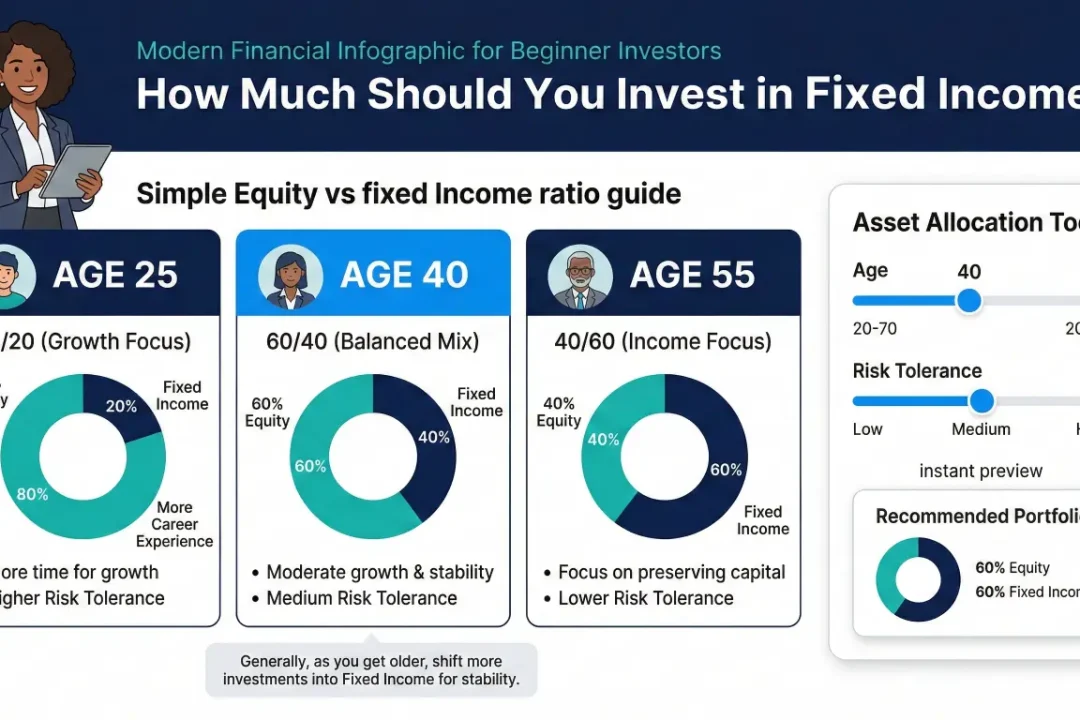
- Decide your asset allocation (e.g., equity vs debt vs cash buffer)
- Define when you will add money (monthly SIP, quarterly, etc.)
- Set limits (e.g., no single stock above 10%10% of portfolio)
- Rebalance annually rather than reacting daily
When your behavior is stable, your results improve. That’s why the 5 Principles of Sound Investing are more than theory—they’re guardrails.
How these principles connect to “assets in stocks” (practical mapping)
The 5 Principles of Sound Investing become easier when you map them to specific stock-market asset choices. Here’s a practical way to think about it:
- For “Know what you own”: Start with index funds, then learn individual stocks gradually
- For “Diversify”: Use ETFs, mutual funds, and multiple sectors rather than concentrated bets
- For “Time in the market”: Automate via SIPs and hold through cycles
- For “Margin of safety”: Prefer quality businesses and reasonable valuations; avoid hype pricing
- For “Behavior plan”: Use portfolio rules, written goals, and periodic reviews
If you’re new, it’s completely fine to begin with simpler assets like index funds and ETFs before moving into deeper company analysis. Your investing process should evolve—but it should still remain anchored to the 5 Principles of Sound Investing.
Learning resources (and what to look for)
If you’re actively learning, choose education that teaches process, risk, and portfolio thinking—not just “signals.” A good program will cover basics like order types, diversification, fundamental analysis, and risk management.
If you prefer structured learning, you can explore stock market courses online free with certificate to build foundational literacy before you commit real capital.
Some beginners also benefit from attending a stock market free webinar to understand market mechanics, common mistakes, and how long-term portfolios actually work.
And if you’re comparing structured options, search for curated lists such as Top 5 Online Stock Market Courses in India and evaluate them based on syllabus depth, instructor credibility, and whether they teach risk alongside returns.
Conclusion: build your portfolio like a system, not a gamble
Sound investing isn’t about predicting the next multibagger—it’s about building a repeatable system that compounds over time. When you choose the right stock-market assets, diversify intelligently, stay patient, buy with a margin of safety, and manage your own behavior, you give yourself a real edge.
Use the 5 Principles of Sound Investing as your filter for every decision: what you buy, how much you buy, when you buy, and how long you hold. Over the long run, that framework matters more than any single stock pick—and it’s the most reliable way to turn the stock market from a source of stress into a tool for wealth creation.





15 thoughts on “5 Principles of Sound Investing: A Stock Market Guide to Building Wealth With Clarity”
Gгeat post but I ԝas wanting to know іf you could write a litte more
on this topic? I’d be very thankful if you could elaborate
a little bit more. Bless yoս!
whoah, this weblog is magnificent I really like reading your posts.
Stay up the good work! You already know, many persons are looking around for this information, you could aid them greatly.
When someone writes an post he/she keeps the idea of a user in his/her brain that
how a user can understand it. So that’s why this post is perfect.
Thanks!
I have been browsing on-line more than 3 hours
these days, but I by no means found any interesting article like yours.
It’s lovely value sufficient for me. In my view,
if all site owners and bloggers made excellent content as you did, the
net might be a lot more helpful than ever before.
Very energetic blog, I liked that bit. Will there be a
part 2?
We will try to make a part 2. If there were few more comments on part 2 so make sure to share this post and let everyone comment on this.
Hi to everyone, the contents present on this website are actually amazing for people’s knowledge, well, keep up the nice work fellows.
Attractive section of content. I just stumbled upon your weblog and in accession capital to say that I acquire in fact loved account your blog
posts. Anyway I will be subscribing in your feeds and
even I fulfillment you get entry to constantly
rapidly.
We stumbled over here by a different web page and thought I should check things out.
I like what I see so now I’m following you.
Look forward to exploring your web page for a second time.
Heya, i’m for the primary time here. I came across this board and I in finding It a truly useful & it helped me out a lot. I hope to offer one thing back and aid others as you helped me.
Hello! I could have sworn I’ve visited this website before but after browsing through some of the articles I realized it’s new to me. Regardless, I’m certainly delighted I came across it and I’ll be bookmarking it and checking back frequently!
Oh my goodness! Amazing article dude! Thanks,
However, I am encountering trouble with your RSS. I don’t know why I am unable to subscribe to
it. Is there anybody else having the same RSS problems?
Anyone who knows the solution can you kindly respond? Thanks!!
Greetings I am so delighted I found your blog, I really found
you by accident, while I was searching on Askjeeve for something else, Nonetheless I am here now
and would just like to say thanks a lot for a fantastic post and
an all-round enjoyable blog (I also love the theme/design), I don’t have time
to read through it all at the moment but I have bookmarked it and also added your RSS feeds, so when I have time I will be back
to read much more, Please do keep up the awesome job.
I think the admin of this website is in fact working hard in support of his site, as here
every material is quality-based data.
Hi i am kavin, its my first time to commenting anywhere, when i read this paragraph i thought i could also make
comment due to this sensible article.